Planets are typically round-shaped bodies in space that orbits stars. Are all Planets are globes? The answer is wrong. We have just gotten our first look at an exoplanet (WASP-103b) that its star’s gravity has deformed into a rugby ball-like body. Now, what is an exoplanet? It is nothing but a planet that is outside of our Solar System. Continue your reading to explore more facts about this discovery!

The Planet WASP-103b is located around an F-type star 1500 light-years away from Earth. Astronomers have found that this star is larger and more massive than the Sun, and it is about one and a half times the size of Jupiter. An international team of astronomers published fresh findings in ‘Astronomy and Astrophysics, which tells about the world’s weird shape for the first time.
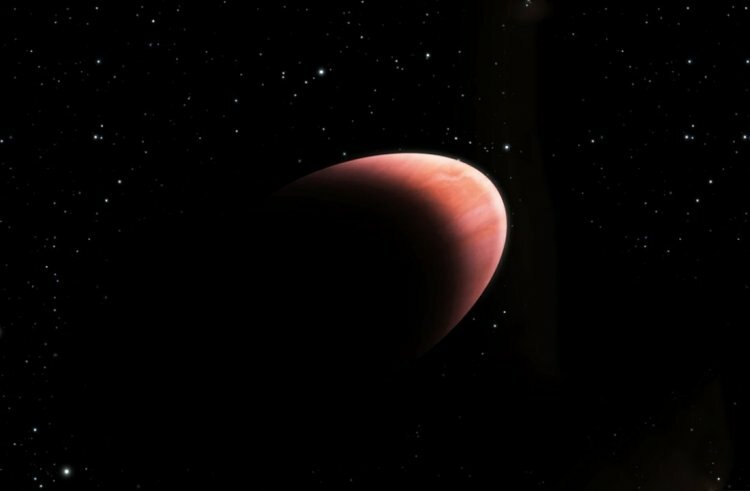
It seems weird because of its proximity to its home star or host star, less than 20,000 miles. Because of that, the tidal stress by its host star pulls WASP-103b into an unlikely shape, which astronomers have compared to a rugby ball. Sometimes, it might also look like an egg or a potato!

As we all know, Planets take a few months or years (Earth!) or many years to make one full orbit of the Sun. But there is a group of exoplanets called Hot Jupiter, which orbit their home star within hours or less than a day. Astronomers discovered that WASP-103b orbits its host star in 22 hours. Although it is not the shortest known orbital period, it is short enough to make WASP-103b a pretty extreme world!
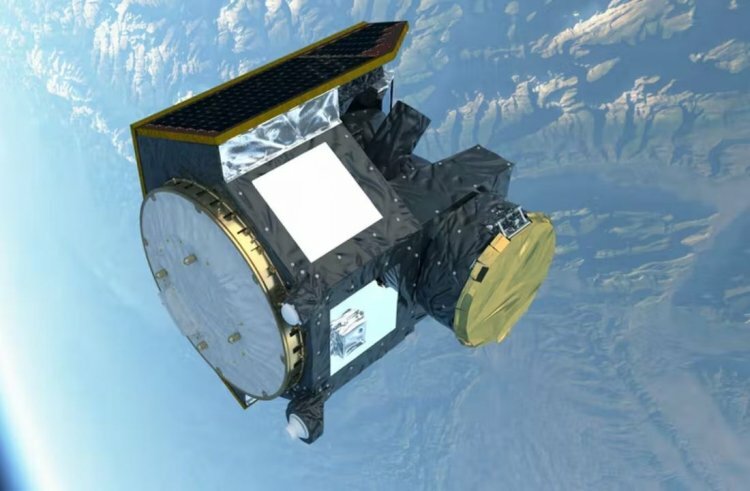
Using the European Space Agency’s Cheops exoplanet-hunting mission and data from NASA’s Hubble and Spitzer space telescope, together they find the weird shaped WASP-103b exoplanet, which orbits WASP-103 in the constellation Hercules.

To date, astronomers have discovered 4884 planets. These planets all come in different shapes, sizes, and configurations. Such a vast amount of data helps astronomers polish their concepts like how planets form and how systems like our own come to be - as well as changing our assumptions.
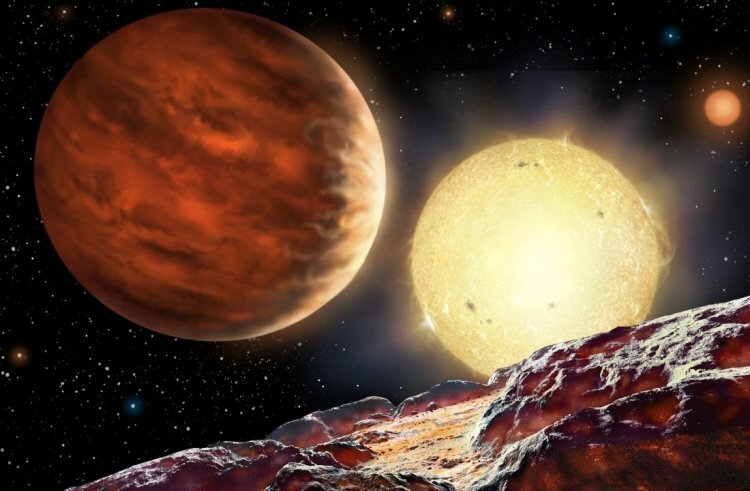
Further studies of this weird-shaped exoplanet will help our astronomers understand the planet's internal structure and what effect it will bring to our world, which is puffed out in comparison to Jupiter. Along with that, it will help to confirm if the planet is, indeed, moving away from the star and what could be causing that.
We know that you can’t wait to see what other strange worlds the telescope might turn up! So, stay tuned with us to get the recent updates!